ServicesGutters
Gutters and Downspouts in Meridian Hills
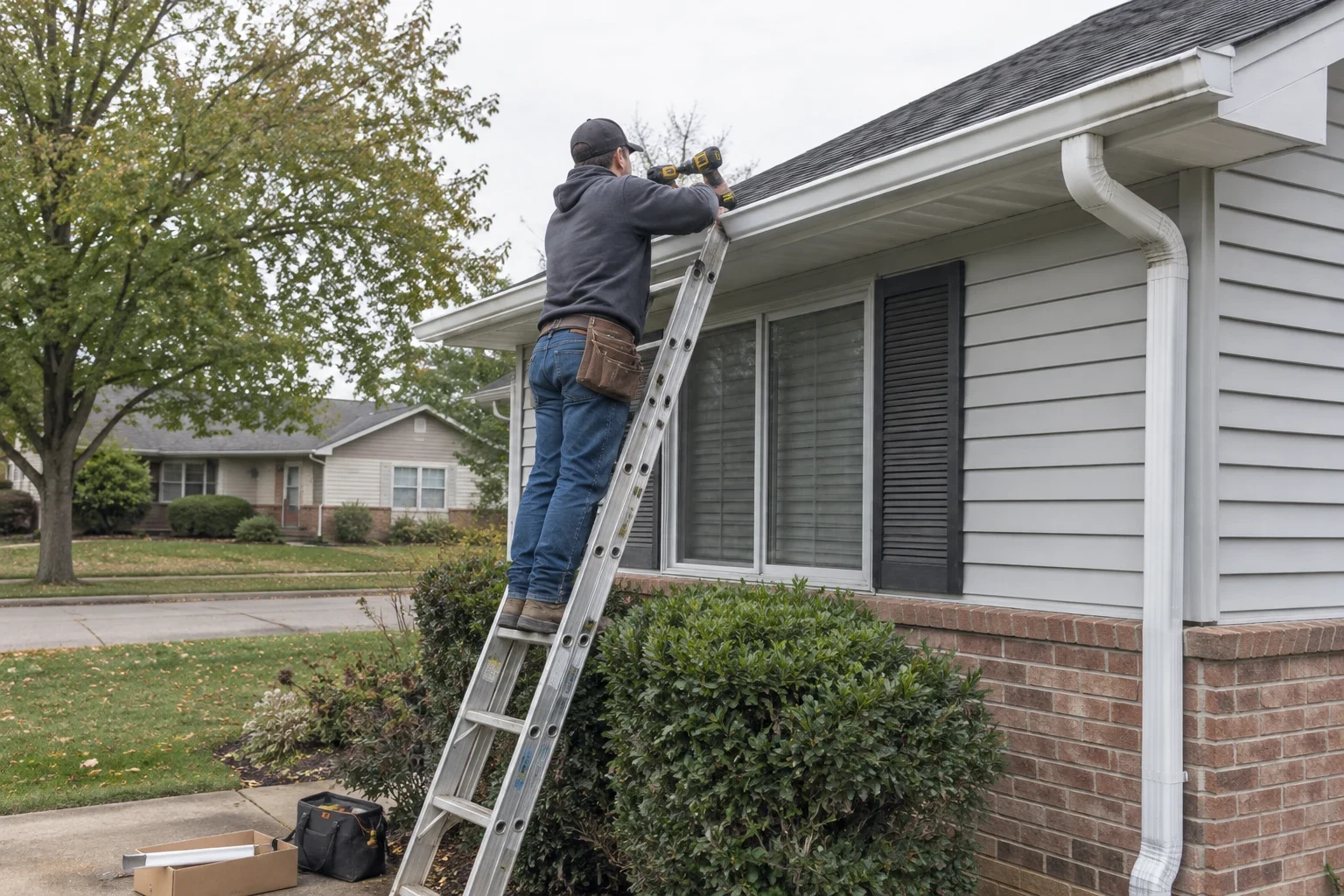
We form each gutter on site as one continuous piece cut to the length of the roof edge, size it to the water your roof sheds and screw it to the fascia with hidden hangers. On the same visit we check the drip edge and fascia boards so the new system drains where it should.
What a gutter system does for your home
A gutter collects the water running off your roof and moves it away from the fascia, siding and foundation. When it is undersized, sagging or pitched the wrong way, water spills over the front edge, soaks the fascia board and pools against the basement wall. Most gutter problems start with one of three causes: the wrong size for the roof area, hangers that have pulled loose, or seams that have opened up.
We install gutters as part of the roof, not as an afterthought. That means looking at the drip edge, the condition of the fascia and the roof pitch before we pick a profile and a material. Central Indiana's freeze-thaw winters are hard on gutters that hold standing water, so slope and downspout placement matter as much as the metal you choose.
Parts and materials in a new gutter system
- Continuous runs rolled from coil
- A gutter machine on our truck shapes coil stock into a single length that matches each eave. Joints show up only at corners and end caps, and those get an outdoor-rated sealant that flexes as the metal expands and contracts.
- Aluminum, steel or copper
- Aluminum in .027 or .032 inch gauge weighs little, never rusts and fits most houses. Galvanized or Galvalume steel stands up better to dents from ladders and dropped branches. Copper is the priciest option; it darkens to brown, later turns green, and pairs well with older brick homes.
- 5-inch or 6-inch K-style profiles
- A 5-inch K-style profile handles an ordinary roof section. Long, unbroken roof planes and steep pitches push extra water toward one eave, so there we step up to 6-inch gutters with 3x4 downspouts to keep a hard spring rain inside the trough.
- Hidden hangers screwed to the fascia
- Hangers go in roughly every two feet with screws rather than the old spike-and-ferrule setup. Spikes loosen as the fascia board swells and dries out, which is the reason older gutters droop between supports.
- Downspout placement and discharge
- We space outlets so none carries an outsized share of the roof. Each downspout ends in an extension or a concrete splash pad that throws water several feet out, letting it soak in away from the basement wall.
When gutters stop doing their job
Overflow from a clean trough
Rain pouring past the outer lip of a gutter you just cleaned means it is too small or sloped toward the wrong end. Both faults drop water right beside the foundation.
Droop between brackets
A run that leans away from the house or hangs low usually has backed-out spikes or rotted fascia behind the hanger. We probe the wood before rehanging anything.
Leaking joints and rust streaks
Sectional gutters drip at each seam once the sealant hardens and cracks. Rust lines or stains on the wall beneath show you exactly where.
Soft or peeling fascia
Repeated soaking from a leaky gutter or an absent drip edge rots the fascia board, starting on the hidden back face.
Ice that stays in the gutter
Standing water freezes solid in winter, and its weight bends hangers. A row of long icicles along one stretch often points to poor slope there.
How a gutter job runs
- 1
Inspection and measurements
We look at the roof edge, drip edge, fascia and existing gutters, then measure each run and the roof area draining to it. You get a written estimate that lists material, size and every line of work.
- 2
Removal and fascia repair
We take down the old gutters and replace any soft fascia board we find, showing you photos before we cover it up.
- 3
Forming and hanging
We roll each continuous run on site and hang it with a gentle fall, dropping roughly 1/4 inch over every 10 feet of length so water heads to its downspout. Then the hidden hangers get screwed into the fascia.
- 4
Water test and cleanup
We run water through the system to confirm it drains, then pick up old metal, screws and debris from the yard and beds.
What moves the cost of new gutters
Gutter pricing depends on how much metal goes up and how hard it is to hang. We price each home after measuring it, and the written estimate shows where the money goes. Financing is available if you want to spread out the cost.
- Linear feet and stories
- Longer runs use more coil, and second-story eaves need taller ladders and more setup time.
- Material and gauge
- Aluminum costs less than steel, and copper costs considerably more than either. Thicker aluminum adds a little but resists bending.
- Gutter size and downspout count
- Six-inch gutters and larger downspouts use more material, and every added outlet adds parts and labor.
- Fascia condition
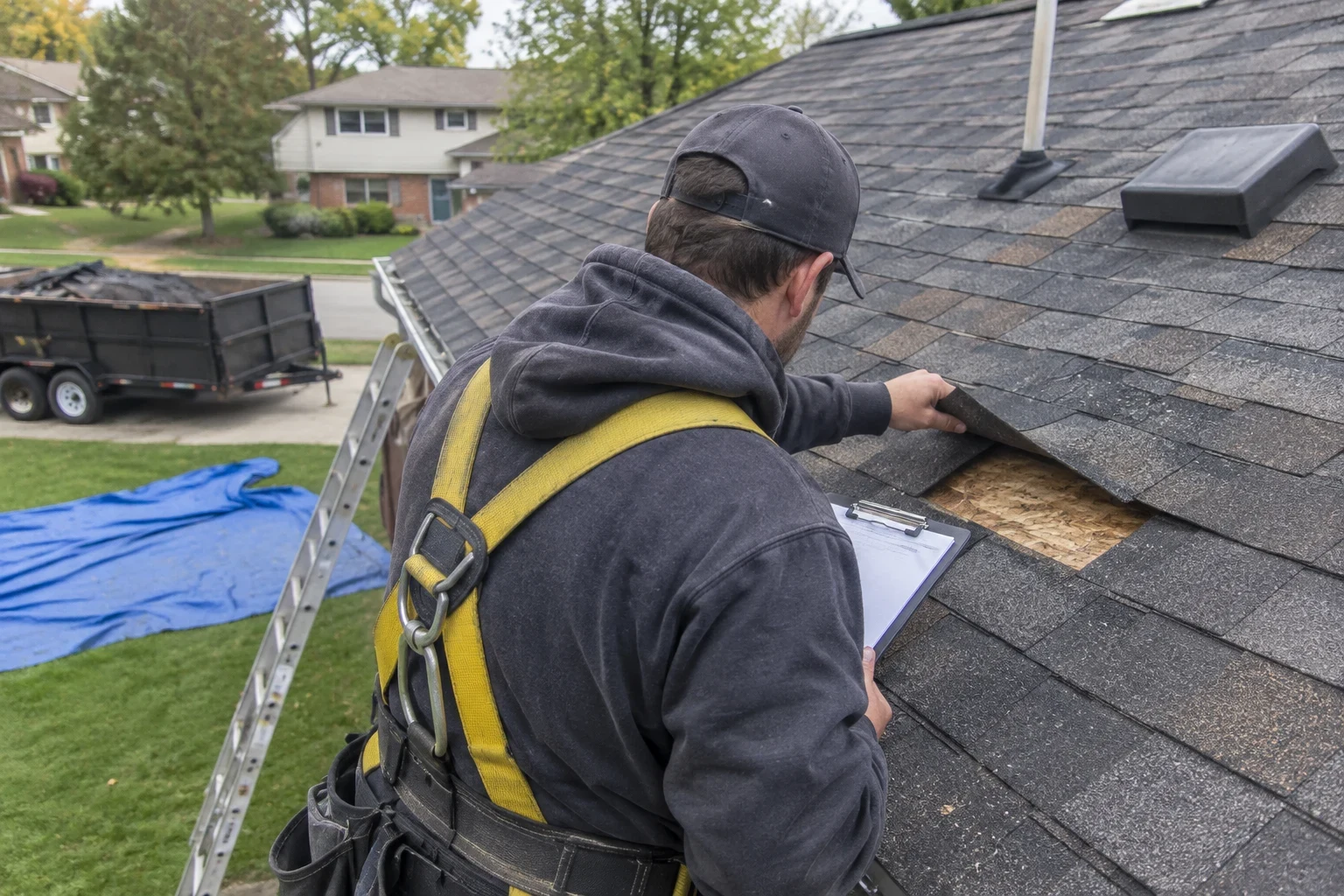
- Rotted fascia board has to be replaced before new gutters go up, and the amount is only clear once the old ones come down.
Gutter questions we hear often
Something not covered here? (317) 707-6771
Should I pick aluminum or steel gutters?
For most homes, .032 inch aluminum is the practical choice. It will not rust, comes in many colors and is easy to repair. Steel is heavier and holds up better where branches fall or ladders lean on the gutter, but a scratch through the coating can rust. We will tell you which one makes sense for your roof edge.
Should I replace gutters at the same time as my roof?
Often, yes. During roof replacement the drip edge is replaced, and new gutters can be hung to match it correctly. If your gutters are in good shape, we can remove and reinstall them instead.
Are gutter guards worth adding?
Under mature trees they earn their place by keeping leaves and seed pods out of the trough. You will still need to brush debris off the top now and then, and some fine-mesh styles can ice over in winter. We go through the trade-offs of each style before you decide.
Can hail damage to gutters be part of an insurance claim?
It can. Dented gutters and downspouts are common evidence of hail. We work with homeowners and insurance companies on storm damage claims and document what we find with photos. See our storm damage repair page for how that process goes.
Why do my gutters overflow even after cleaning?
Usually the gutter is too small for the roof area feeding it, the slope runs the wrong way, or one downspout is handling too much water. Moving to a 6-inch gutter or adding an outlet typically fixes it.
Get your gutters and roof edge checked
We will look at your gutters, fascia and drip edge together and explain what we find in plain terms. You get your estimate in writing.