ServicesRoof Inspections
Roof Inspections in Meridian Hills
We check every layer of your roof we can reach: shingles or panels, flashing, pipe boots, vents, decking and gutters. You get photos, a plain written summary and an honest answer on whether anything needs work now, later or not at all.
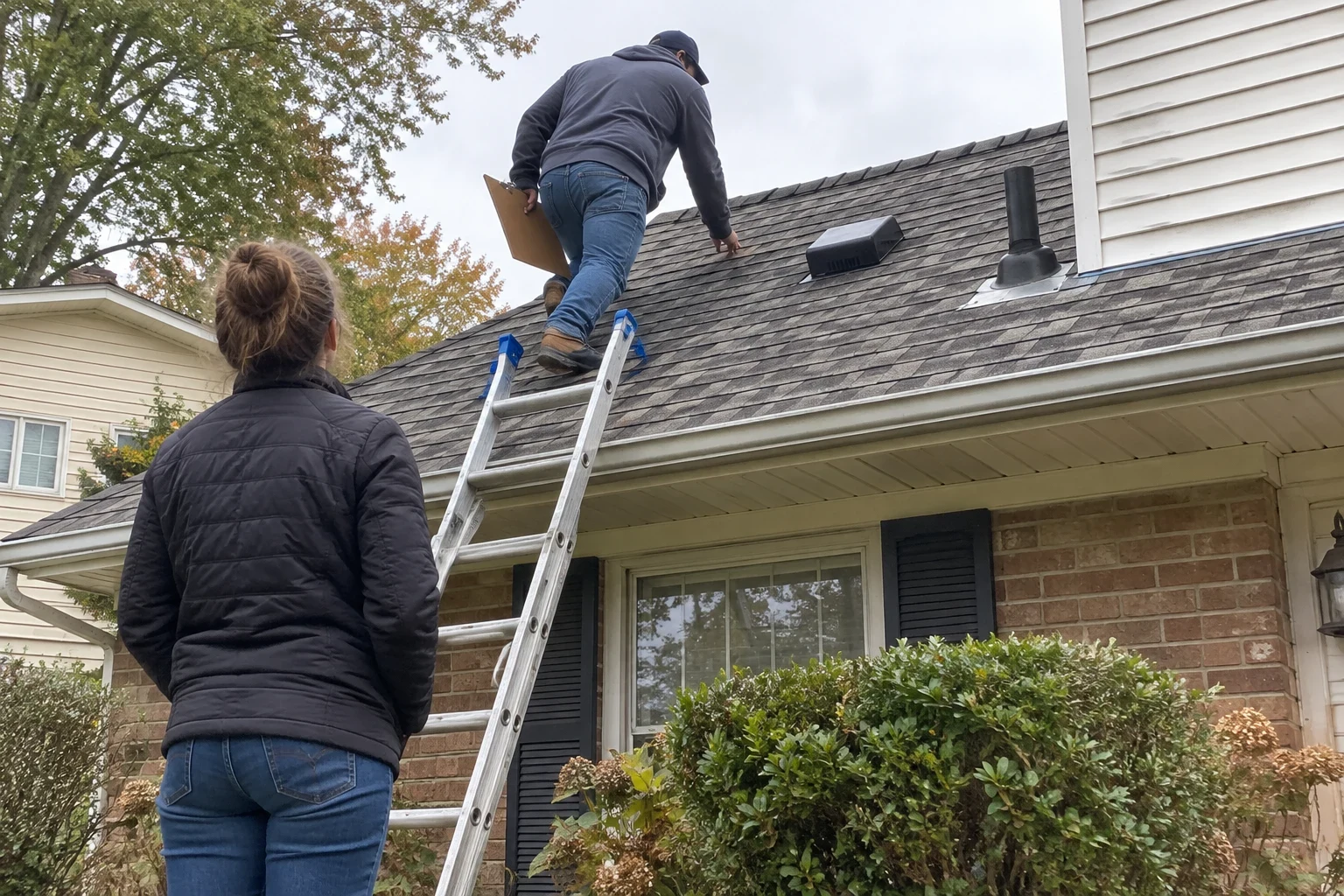
What a roof inspection actually tells you
A roof is a set of materials that age at different rates. Asphalt shingles shed their granules, the sealant strip under each shingle lets go, rubber pipe boots crack in the sun, and step flashing can pull away from a wall as the framing shrinks. We check each of those parts on its own, so you know which one is failing instead of guessing from a stain on the ceiling.
An inspection is the right call before you buy or sell, after hail or high wind, once a roof is past 15 years, or when you are weighing repair against replacement. Winter freeze-thaw cycles push water into small gaps, so a look in spring catches problems while they are still small repairs.
The inspection is free. We tell you what we found and what we would do about it, and if the roof is in good shape, we say so.
What we check on your roof
- The roof surface
- On asphalt shingles we look for granule loss, cracked or curled tabs, shingles that have come unsealed and lift in wind, and hail bruises that feel soft where the mat has fractured. On metal we check fasteners, washers and panel seams. On a TPO flat roof we probe the heat-welded seams and look for punctures and shrinkage at the edges.
- Flashing and penetrations
- Most leaks start at transitions, not in the open field of the roof. We check step and counter flashing at walls and chimneys, valley metal, pipe boots, exhaust vents and skylight curbs for gaps, rust and failed sealant.
- Attic and ventilation
- Up under the rafters, we watch for light showing through the boards, sheathing that is dark or wet, nail points with rust on them and white frost marks in cold months. Each of those means warm, humid air is getting trapped, so we confirm the soffit intake and the ridge or box vents are moving air evenly and that insulation is not packed against the vents.
- Decking and roof edges
- Soft spots underfoot usually mean rotted OSB or plywood below. At the eaves we check drip edge, the starter course and fascia, where ice dams do most of their damage.
- Gutters and drainage
- We look at hangers, seams and downspouts, and at what is sitting in the gutter. A heavy layer of shingle granules is one of the clearest signs of an aging roof.
Signs it is time for a roof inspection
Granules collecting in the gutters
Granules protect the asphalt from UV. Once they wash off in quantity, the shingle underneath dries out and cracks faster.
Ceiling or wall stains
A brown ring on a ceiling or a damp spot at the top of a wall means water is already getting past the roofing. The source is often several feet uphill from the stain.
Ice dams along the eaves
Thick icicles and ridges of ice at the edge usually mean attic heat is melting snow higher up. That water backs up under shingles, so ventilation and insulation need a look.
Shingles or pieces in the yard
After a windstorm, a missing shingle leaves the underlayment exposed. One gap can let water reach the decking in the next rain.
Hail in the area
Hail damage is hard to see from the ground but shortens shingle life. An inspection gives you photos before you decide whether to file a claim.
A home sale or an older roof
Buyers and sellers both benefit from knowing what the roof is made of and how much life it has left. The same goes for any roof you know little about.
What it costs, and what sets the price of any work after
There is no charge for the inspection, and nothing obligates you to hire us afterward. If we do find work, these are the things that move the price of a roof repair or roof replacement. Financing is available when the job turns out larger than you planned for.
Which part is failing
Swapping a cracked pipe boot is a small job. Rebuilding chimney flashing or resealing a long TPO seam takes more labor and more material.
Condition of the decking
Sheathing that has gone soft from water has to come out, and fresh OSB or plywood gets fastened to the rafters before any shingles or panels go down. Some of that rot stays hidden until the old roofing is stripped, so we explain ahead of time how any extra sheets would be priced and approved.
Pitch, height and access
Steep and two-story roofs need more safety setup and slow the crew down. Tight lots and landscaping close to the walls add time as well.
Existing layers
Tearing off two layers of shingles means more labor and more disposal weight than stripping a single layer.
Insurance on storm damage
If a claim for hail or wind damage is approved, the deductible on your homeowners policy sets your share and the insurer handles the approved remainder. Whether the damage qualifies is decided by the adjuster. Our part is documenting what we found and explaining the scope of the repair.
How the inspection goes
- 1
A short call to set a time
Tell us roughly how old the roof is, whether you have seen leaks and whether a storm came through recently. That tells us what to look at first.
- 2
Exterior and on-roof check
The first pass happens from the yard and along the gutters. If the slope is walkable and the surface is dry, we climb up and inspect the roof by hand. On very steep or wet roofs we stay on a ladder at the eaves and rely on close-up photos rather than stepping onto the shingles.
- 3
Attic look
With your permission we check the underside of the decking, the ventilation and the insulation. This is where hidden moisture shows up first.
- 4
Findings, photos and options
We walk you through the photos and explain each issue by part and cause. You get a written summary and an honest repair-or-replace answer, and if the damage is from a storm, we explain how the claim process works.
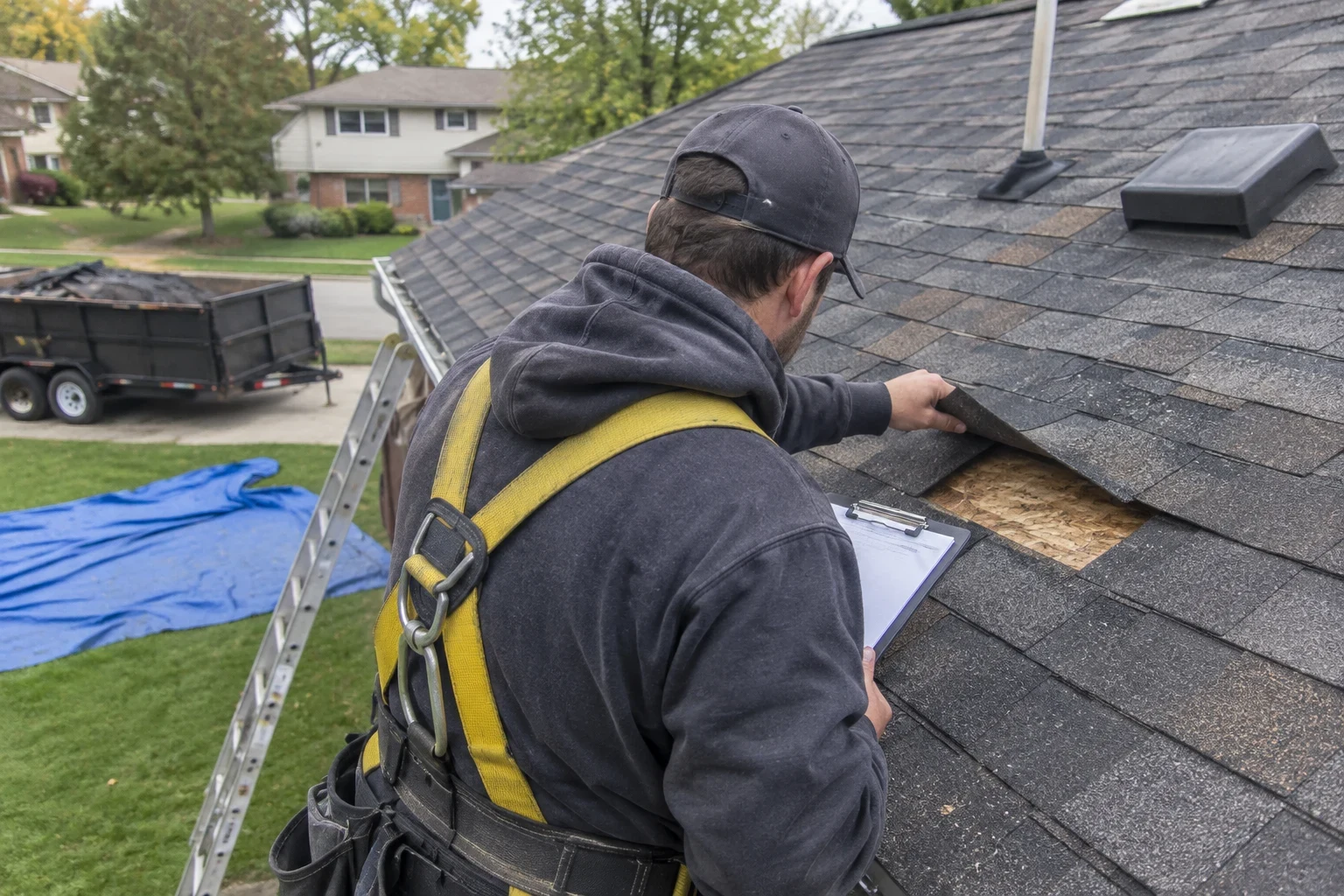
Before you book: common inspection questions
Do I pay anything for the inspection?
No. We don't bill for the visit, and you are not committed to hiring us for anything we find. The photos and written summary are yours to keep regardless.
Do you actually get up on the roof?
When the pitch and weather make it safe, yes, because problems like unsealed shingles or soft decking can't be judged from the ground. On very steep or icy roofs we work from a ladder and rely on close-up photos, and we tell you which method we used.
Do I need to be home?
Not for the outside check. We do need someone there to let us into the attic, and that part often tells us the most about leaks and ventilation, so we suggest being home if you can.
Will you just tell me I need a new roof?
No. Many roofs only need a pipe boot, a few shingles or new flashing along one wall. We go through the photos with you and explain why we recommend repair or replacement, so you can weigh it yourself.
Can an inspection help with an insurance claim?
It can. We photograph hail bruises, creased tabs and wind-lifted shingles with the date recorded and note where each one sits on the roof. We work with homeowners and insurance companies on storm damage claims. The adjuster decides coverage, but a clear record gives that conversation a solid starting point.
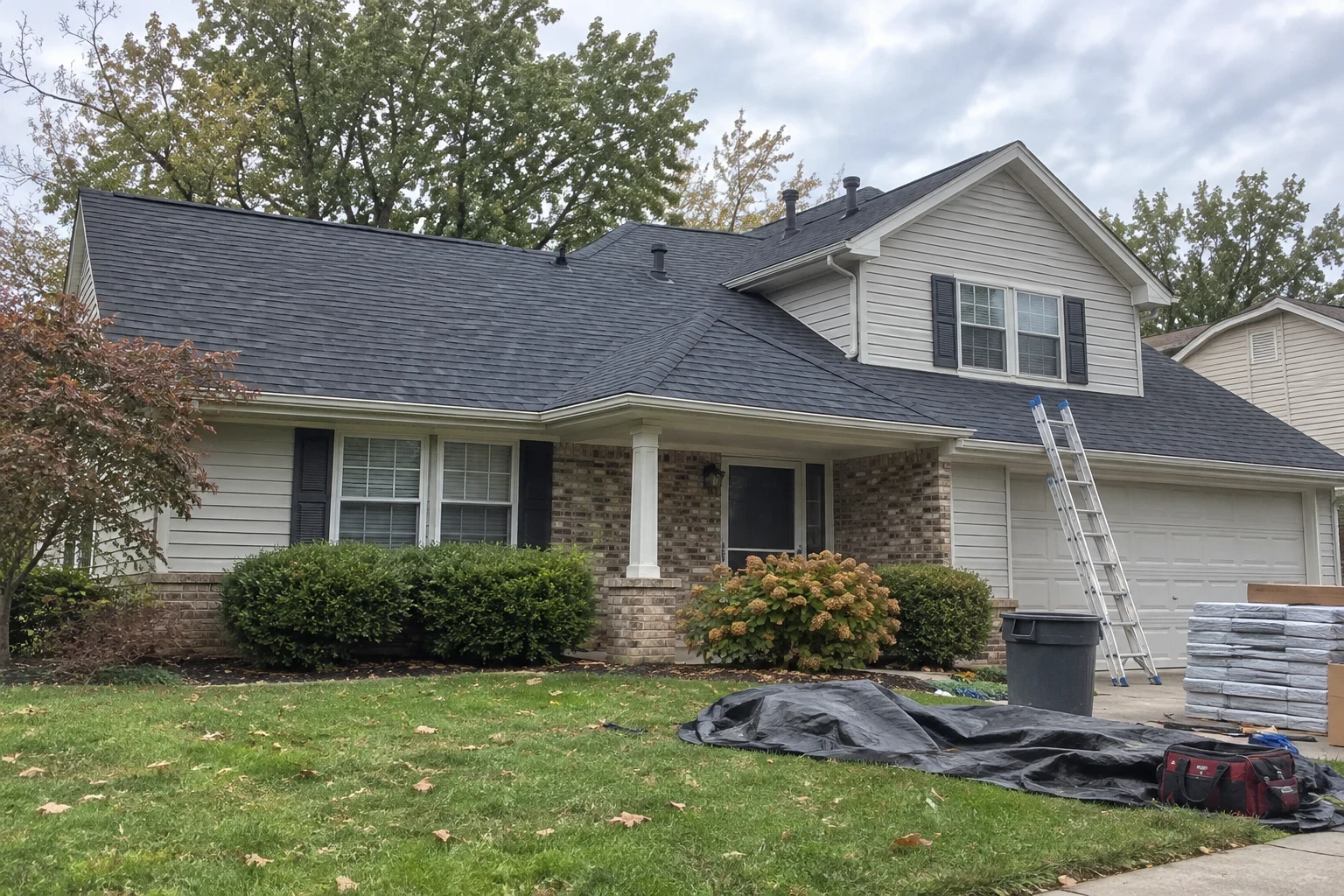
Know what your roof is made of and how it is holding up
One visit gives you photos of every part we checked and a plain answer on what, if anything, needs attention. We serve Meridian Hills and the surrounding area.