ServicesRoof Replacement
Roof Replacement in Meridian Hills
We tear your old roof down to the deck, fix what we find underneath and install a new system with the right underlayment, flashing and ventilation. Before any of that, we walk you through shingle, metal and TPO options so you know what each one costs you over time.
Replace or keep repairing: how to tell
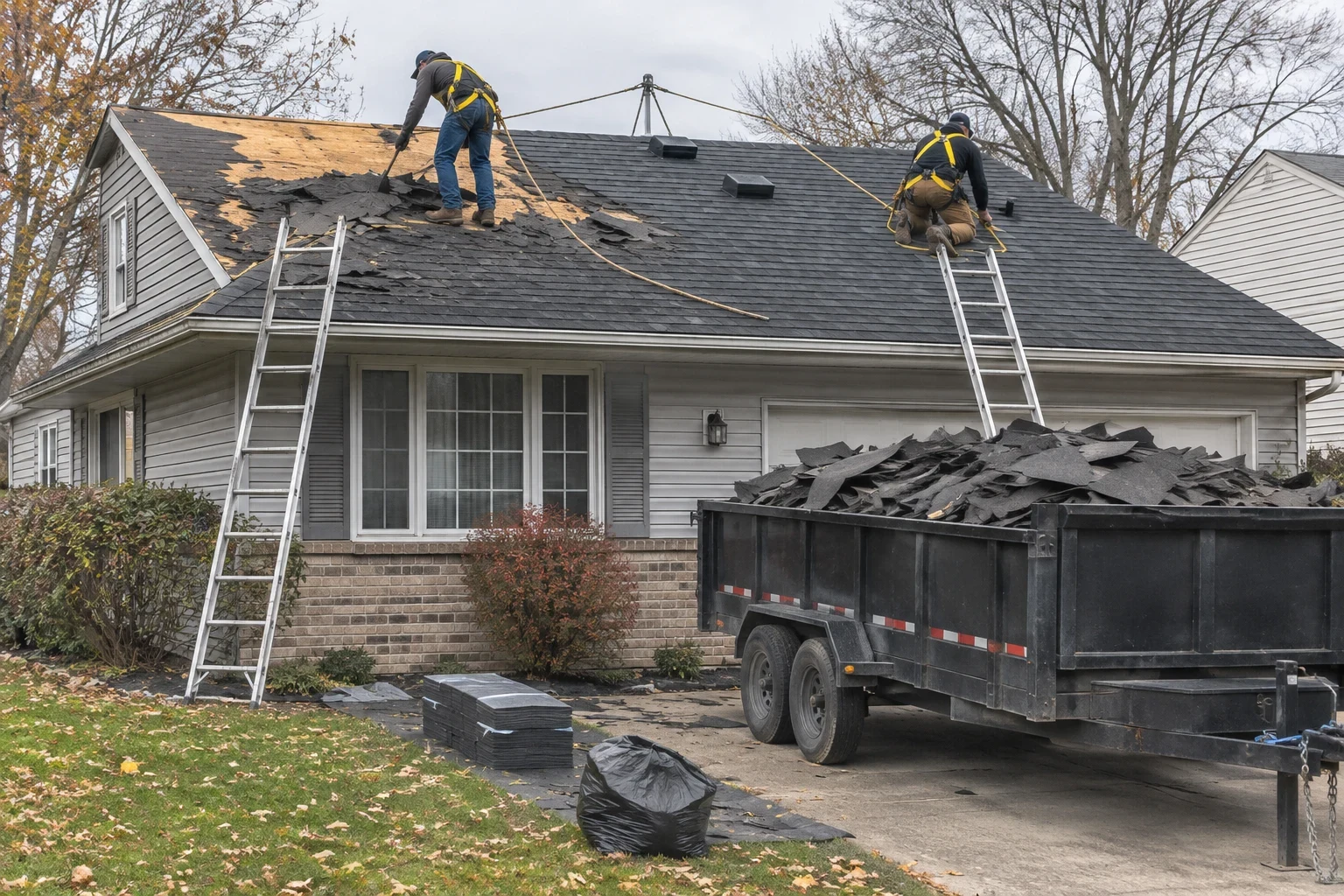
Replacement makes sense once the whole surface is worn out, not just one spot. Asphalt shingles that have shed most of their granules can no longer shield the asphalt mat from UV, so they curl, crack and let water wick under the tabs. Patching one area at that stage only moves the next leak a few feet over.
A new roof is also your chance to switch to a different covering. Architectural asphalt shingles suit most pitched roofs and keep the cost down. Standing-seam metal costs more up front but sheds snow and lasts far longer. Low-slope sections over porches or additions often do better with TPO membrane than with shingles, which need pitch to drain. We explain those trade-offs on your actual roof, not in general.
If the inspection shows the roof still has years left, we will tell you so and point you to roof repair instead.
What a full replacement includes
- 01
Complete tear-off
We strip every layer down to the decking. Building codes cap a roof at two layers, and even where a second one is allowed, laying over old shingles hides soft decking and traps heat.
- 02
Deck inspection and repair
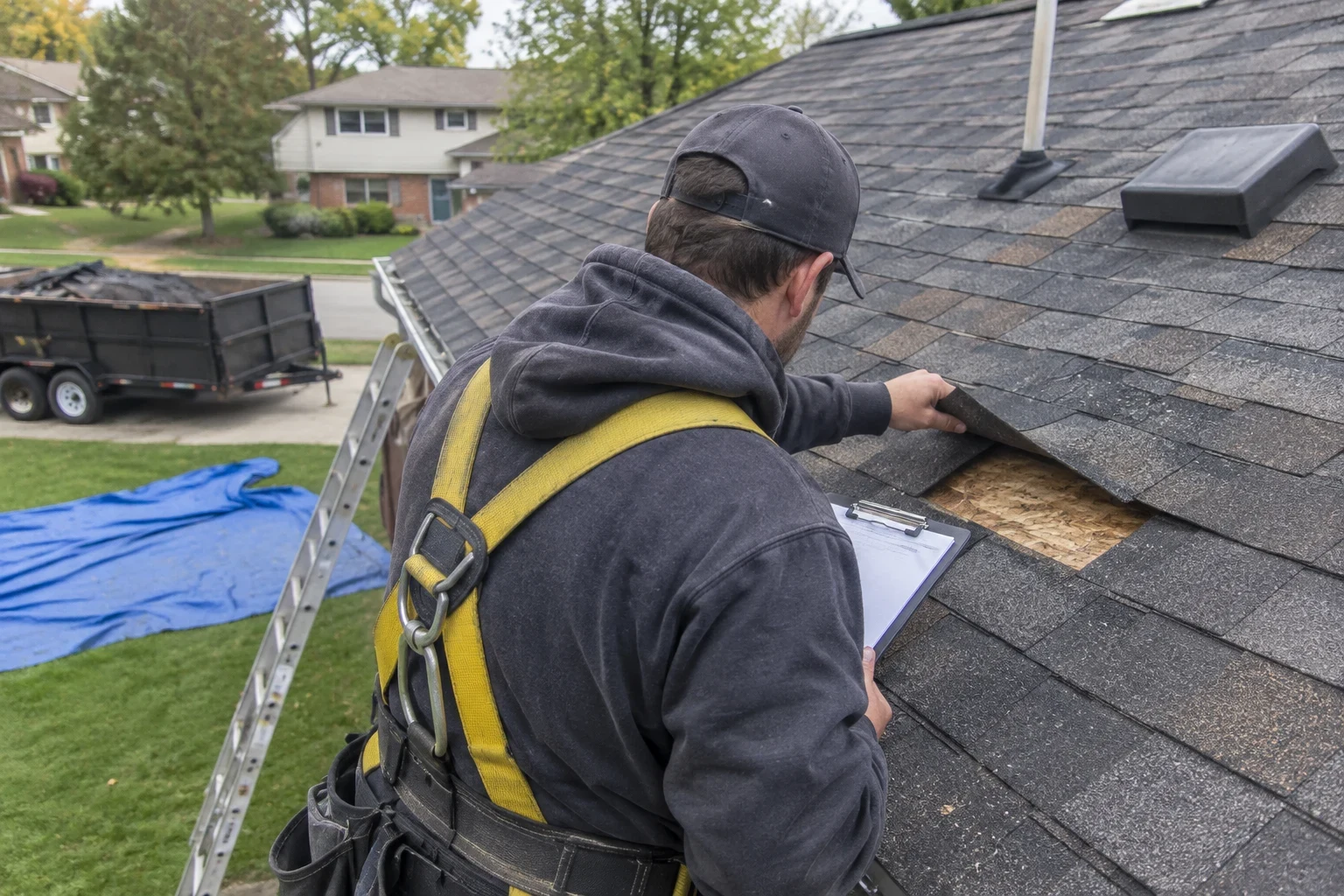
With the deck bare, we check every sheet of plywood, OSB or old plank board. Rotted or delaminated sections are cut out and replaced so the new roof is fastened to something solid.
- 03
Ice and water shield plus synthetic underlayment
Self-adhering ice and water membrane goes along the eaves, in valleys and around penetrations, where freeze-thaw ice dams push water uphill. Synthetic underlayment goes over every remaining square foot of sheathing.
- 04
Fresh metal at edges and walls
Step flashing along sidewalls, pipe boots and drip edge are all replaced instead of reused. Worn-out flashing is where most leaks on a new roof begin.
- 05
Balanced ventilation
We match ridge vent exhaust to soffit intake. A hot, humid attic cooks shingles from below in summer and grows frost on the nails in winter.
- 06
Cleanup and nail pickup
Tarps protect plantings, walls and windows while the old roof comes off. Before we pack up, a rolling magnet goes back and forth across the lawn, beds and driveway to pull loose roofing nails out of the grass and gravel.
Questions about Roof Replacement?
Call(317) 707-6771Warning signs it is time for a new roof
Granule loss and cupped shingles
Grit collecting in the gutters and shingle edges turning upward mean the asphalt is drying out. That is age, not a single defect.
Sagging rooflines
A dip between rafters usually points to deck sheathing that has absorbed water for a long time. It needs to come off, which means the roofing over it does too.
Repeated leaks in different places
One leak is a repair. New stains showing up in several rooms over a few seasons tell you the underlayment has failed across the roof.
Daylight or damp in the attic
Go up on a sunny afternoon and look for pinpoints of sun between the deck boards, blackened water tracks on the plywood or insulation that feels wet after a storm. Each one means water is already slipping past the roof system.
Widespread hail or wind damage
When bruised or creased shingles cover most slopes, our storm damage repair team can help you document it for your insurance company.
How a replacement job runs
- 1
Free inspection and options review
We look at the roof, the attic and the ventilation, take photos of what we find and go over which materials suit your roof pitch and your budget.
- 2
Written line-item estimate
You get the scope in writing: tear-off, expected decking, underlayment, flashing, vents and the roofing you chose. We note how any deck replacement found later will be priced, so it is not a surprise.
- 3
Permit and scheduling
We pull the permit where your town requires one and set a start date around the weather, since shingles seal best above freezing.
- 4
Tear-off and install
Most asphalt roofs on a typical home are stripped and dried in the same day, so the house is never left open overnight. Metal and TPO can take longer depending on the trim work.
- 5
Final walk-through
We check flashing, vents and fastening, finish cleanup and walk the property with you before we call the job done.
What moves the price of a new roof
Two homes with the same square footage can price very differently. The material is the biggest choice you make, but the condition of the deck and the shape of the roof matter almost as much. We put each of these on the estimate as its own line.
- Material choice
- Architectural asphalt shingles are the most economical. Standing-seam metal costs more to buy and install, and TPO pricing depends on insulation board and seam work on low-slope areas.
- Roof size and pitch
- Steep roofs need extra safety setup and slow the crew down. More squares of roofing means more product and labor.
- Complexity
- Valleys, dormers, skylights and chimneys each need hand-cut flashing. A simple gable roof costs less than a cut-up hip roof of the same size.
- Decking condition
- Rotted sheathing can only be fully counted once the old roof is off. That is why we list a per-sheet price up front.
- Layers and disposal
- Two layers of old shingles mean more labor and heavier dumpster loads than one.
Roof replacement questions
Is a layover cheaper than a tear-off?
It saves some labor up front, but we advise against it. A second layer hides the deck, adds weight and keeps the new shingles from sitting flat over the bumps of the old ones. Stripping to the wood lets us fix rot and put ice and water shield where it belongs.
Should I switch to metal when I replace?
The answer usually comes down to how many years you expect to own the house and what you want to spend now. Standing-seam metal carries a higher installed price, outlasts asphalt by a wide margin and lets snow slide off instead of building up. Our metal roofing page explains the panel types, and during the inspection we will price both coverings on your actual roof.
Do you offer financing?
Yes, we offer financing. We can go over the options by phone or when we bring you the written estimate.
Will insurance pay for a new roof?
Insurance usually covers storm damage, not normal wear. We work with homeowners and insurance companies on storm damage claims, providing photos and a clear scope, but the adjuster makes the coverage decision.
How long will the work take?
A typical asphalt shingle replacement on a single-family home takes one to two days once work starts. Rain, deck repairs or a metal or TPO system can add time, and we will tell you the expected schedule before we begin.
Find out what your roof actually needs
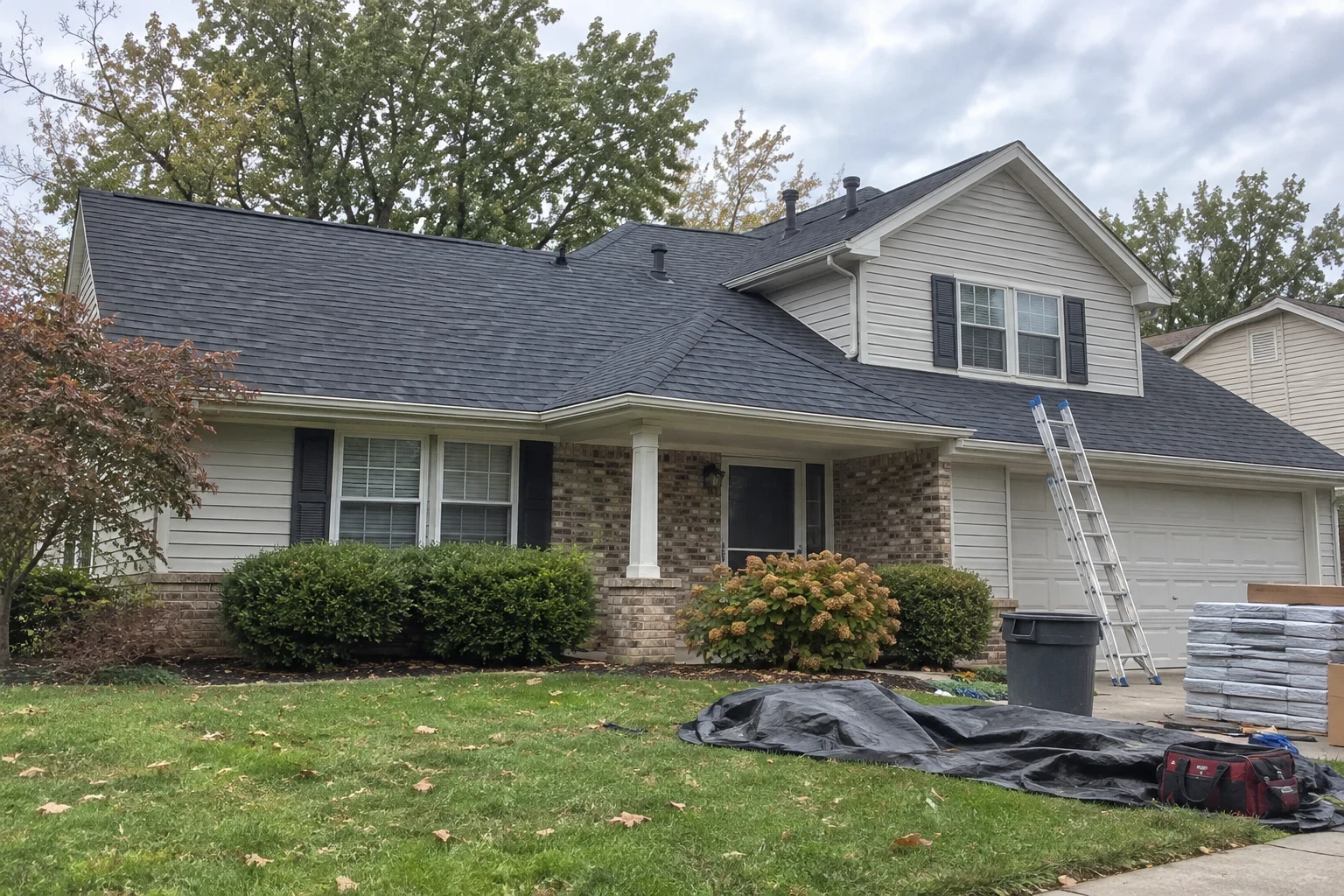
We will inspect the roof and attic, show you photos and explain your material options with no pressure to replace a roof that still has life in it.