ServicesRoof Repair
Roof Repair in Meridian Hills
Most leaks trace back to one small part: a split pipe boot, step flashing that has lifted or a handful of shingles whose seal let go. We locate that part, photograph it for you and fix it with components that suit the roof already on your home.
When a repair is the right call
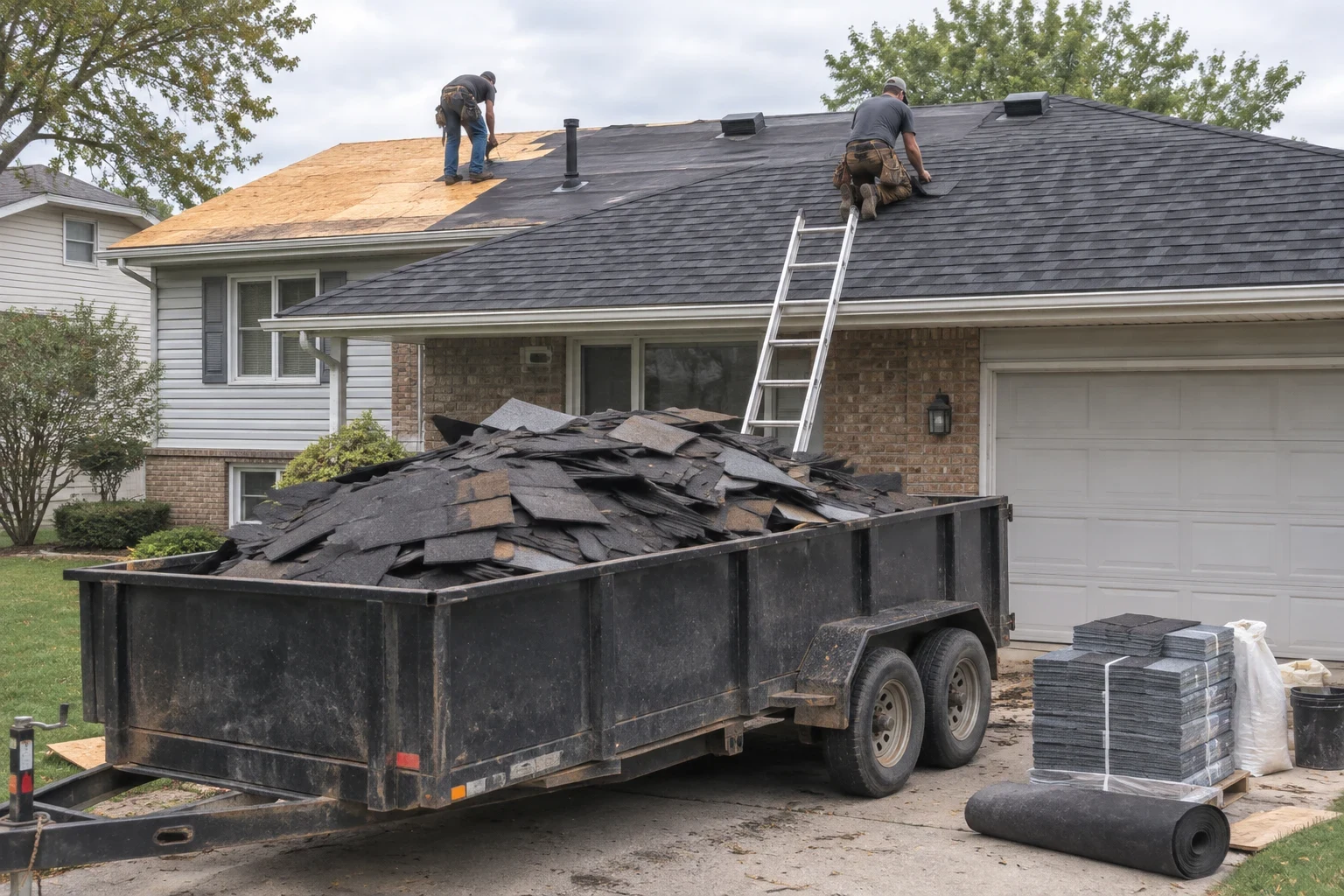
A roof is a system of layers: decking, underlayment, the outer covering and the metal and rubber parts that seal every edge and opening. When one of those parts fails and the rest still has years left, a repair is usually the sensible choice. Replacing a whole roof because one flashing joint opened up is money spent in the wrong place.
The repair also has to suit the material. Asphalt shingles, standing seam or exposed-fastener metal and TPO membrane each fail in their own ways and each needs a different fix. We tell you which kind of repair your roof needs and why, and if the roof is too far gone for a patch to hold, we say so and explain what we saw.
The work we do on a roof repair
- 01
Finding the entry point
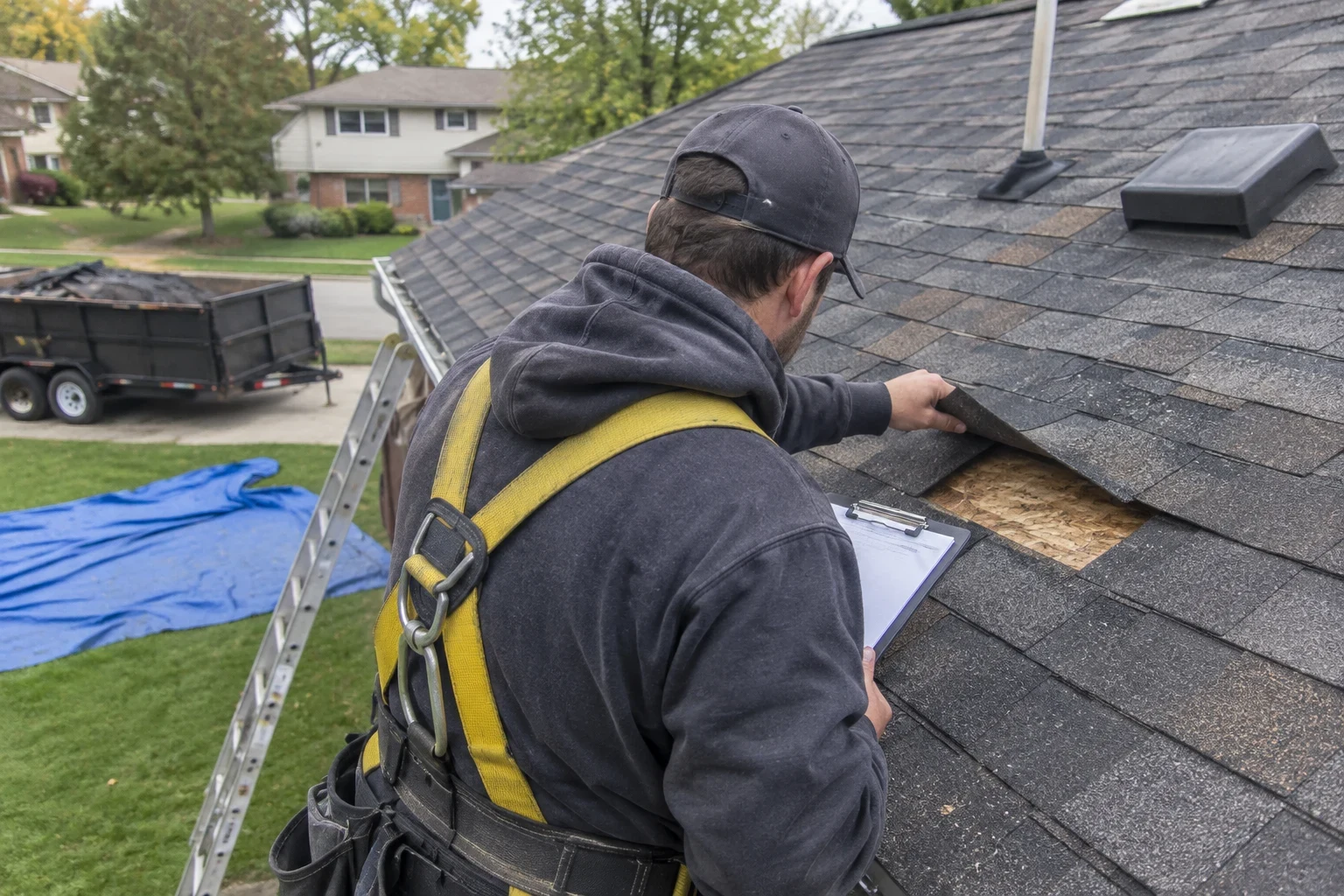
The stain on your ceiling is rarely right below the hole. Water tends to run along a rafter or across the top of the decking before it drips, so we check both the attic and the roof surface and put the repair where water is actually getting in.
- 02
Flashing repair
We reseat or replace step flashing along walls, counterflashing at chimneys and the apron and saddle flashing around skylights. Caulk alone is a short-term fix at these joints, so we rebuild the metal where it has pulled loose or rusted through.
- 03
Pipe boots and vents
Neoprene collars on plumbing vents crack after years of sun and cold, and they are one of the most common leak sources we find. We swap them for new boots and check the seal on box vents, ridge vents and exhaust caps.
- 04
Shingle replacement
Missing, creased or cracked shingles are replaced one course at a time, with nails driven in the manufacturer's nailing zone and the sealant strips pressed down so they grip in the next warm spell. We match color and profile as closely as current products allow.
- 05
Metal and flat roof fixes
On metal roofs we replace backed-out fasteners and worn washers and reseal panel laps. On TPO we clean the membrane and heat-weld a patch, which fuses to the existing sheet instead of sitting on top of it.
- 06
Decking spot repair
When a leak has softened the plywood or OSB beneath it, that wood will not hold nails. We remove the weakened piece back to solid framing and fasten fresh sheathing in its place, then rebuild the layers above it.
Questions about Roof Repair?
Call(317) 707-6771Signs your roof needs repair
A stain that grows after rain
A brown ring on a ceiling or wall that darkens after storms means water is getting past the roof covering. The sooner it is traced, the less insulation and drywall you have to replace.
Shingles on the lawn
Wind lifts shingles whose sealant strip has let go, and once one tab is gone the ones above it are exposed. A few missing shingles is a quick repair if it is handled before the underlayment starts taking water.
Drips in a thaw
Water inside during a winter thaw often points to an ice dam backing meltwater under the shingles at the eaves. A repair addresses the damaged area, and we will also look at the attic ventilation and insulation that let the dam form.
Rust or gaps at the chimney
Rust streaks, dried-out caulk or flashing that has pulled away from the brick are early signs of a leak at one of the most common trouble spots on any roof.
Loose screws on a metal roof
Exposed-fastener panels expand and contract every day, which slowly backs screws out and wears the rubber washers. Each loose screw is a small hole in the roof.
How a repair visit runs
- 1
Free inspection
We walk the roof surface, check each flashing joint and look in the attic when it is accessible. You see photos of the problem and hear what started it, so you know why the leak began and not only where it shows.
- 2
Written estimate
We list each repair item and the material we plan to use. If the roof needs more than a repair, we tell you plainly and leave the choice with you.
- 3
The repair
Most repairs take part of a day. We protect landscaping below the work area, remove the failed parts, check the decking and install new components in the correct overlap order so water sheds over each layer.
- 4
Cleanup and photos
Before we leave, a magnetic sweeper goes over the lawn, beds and drive to pick up loose nails. The old parts we pulled off leave with us, and you get photos showing the finished repair.
What drives the price of a repair
The part that failed and the condition of the wood beneath it set most repair prices. After the inspection you get a written estimate listing each item, so no work starts before you have seen it. Financing is available for larger repairs.
- Roofing material
- Shingle repairs are usually the simplest. Metal panels and TPO membrane need specific parts, sealants or heat-welding equipment, and that changes both labor and parts cost.
- Hidden decking damage
- A leak left for a season can rot the decking under it. Replacing soft plywood or OSB adds lumber and time that cannot be seen until the old covering is removed.
- Pitch and access
- Steep slopes, multiple stories and tight spots around dormers or chimneys require more safety setup and slower work.
- Flashing complexity
- A cracked pipe boot is a small job. Rebuilding the flashing around a chimney, with new step flashing and counterflashing cut into the mortar, is a bigger one.
Roof repair questions
Can you match my existing shingles?
Often closely, but not always exactly. Shingle lines get discontinued and older shingles fade with years of sun, so even the same color name can look slightly different at first. We bring samples and show you the closest match before we install anything.
My roof is getting older. Is it still worth fixing?
Age alone does not decide it; condition does. When the damage sits in one area and the surrounding shingles still lie flat and hold their granules, a fix usually pays off. Brittle shingles that snap when bent, curling across whole slopes or leaks in several spots suggest a roof replacement is the better spend, and we show you the photos behind that view.
Will my insurance pay for the repair?
If wind or hail caused the damage, it may be covered under your policy. Wear and age generally are not. We work with homeowners and insurance companies on storm damage claims, and our storm damage repair page explains how that process runs.
Can you repair a roof in winter?
Yes, within limits. Shingles are brittle in hard cold and the sealant strips need warmth to grip, so we may hand-seal tabs or make a sound temporary repair and finish the work on a milder day. Flashing and pipe boot repairs can usually be done any time the roof is dry and safe to walk.
How long will a repair last?
A properly installed new component, such as a pipe boot or a run of step flashing, should last about as long as similar new parts would on a new roof. The repair cannot extend the life of the shingles around it, though, so we tell you how much life we think the rest of the roof has left.
Find the source of the leak
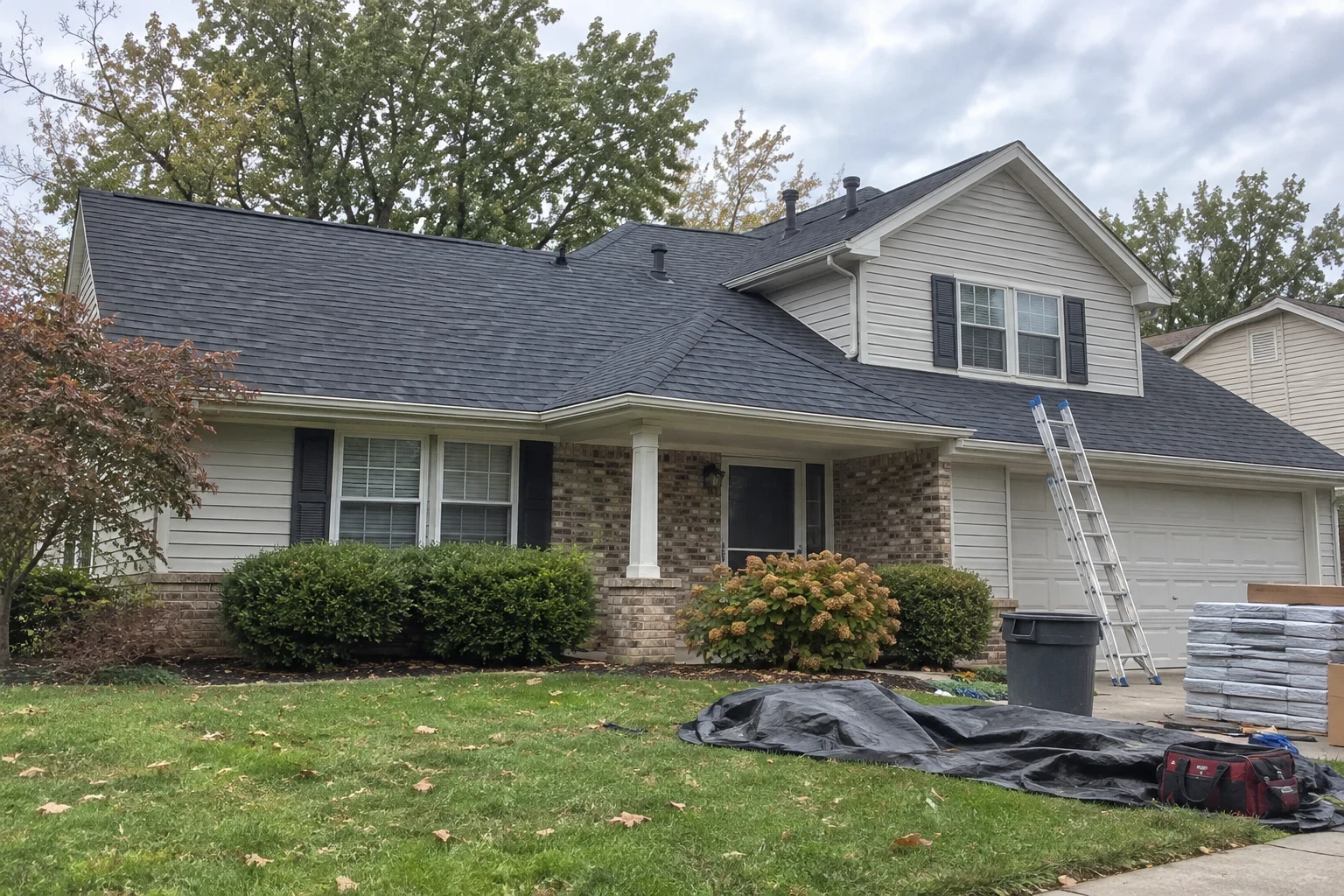
We will inspect your roof at no charge, photograph the problem and explain the repair in plain terms. You decide what happens next.