ServicesMetal Roofing
Metal Roofing in Meridian Hills
We install standing seam and ribbed steel roofs on homes and explain how each system handles snow load, hail and summer heat before you choose. You get a clear comparison of panels, coatings and fastening methods, plus a written estimate.
How Metal Roofing Works and Who It Suits
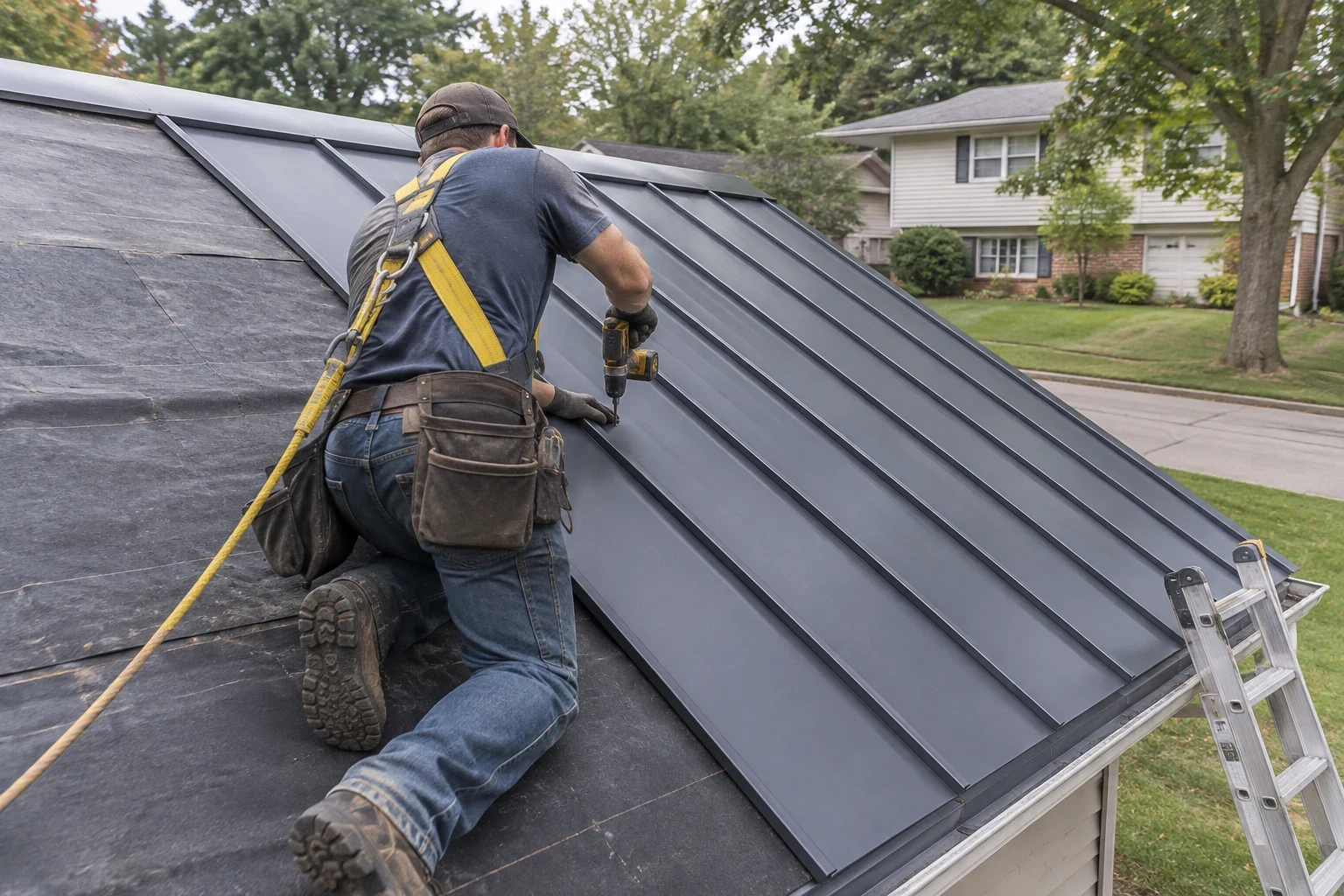
Metal roofing means steel or aluminum panels fastened over solid plywood or OSB decking, with a high-temperature underlayment between them. We install two main systems. Standing seam panels lock together at raised seams that hide the clips and fasteners. Exposed-fastener panels are held down by screws with rubber washers driven through the face of the panel.
Metal is a strong choice if you plan to keep your home for many years, if you want snow to slide off rather than sit on the roof, or if a low-slope porch or addition keeps wearing out shingles. The upfront cost runs higher than asphalt, so we set it side by side with our shingle roofing options and give you real figures to compare.
Steel expands in summer heat and contracts on cold winter nights, and Indiana's freeze-thaw swings make that movement bigger than most people expect. A long panel can change length noticeably over a single year. That is why we treat the clip or screw pattern as seriously as the choice of metal.
What Our Metal Roofing Work Includes
- Tear-off and deck check
- We remove the old roofing so we can see the plywood or OSB underneath. Soft, delaminated or rotted sheets get replaced before any metal goes on, because panels will telegraph every dip in the deck.
- High-temperature underlayment
- Metal runs hotter than shingles in direct sun. We use a synthetic underlayment rated for that heat, plus ice and water membrane along the eaves and in valleys where meltwater backs up.
- Panel and coating selection
- We compare Galvalume steel, painted steel and aluminum, and explain the difference between PVDF (Kynar) finishes and SMP paint. PVDF holds color and resists chalking longer; SMP costs less and fades sooner.
- Trim, flashing and closures
- Ridge caps, eave and rake trim, chimney and pipe flashing, and foam closures under the ribs all get fitted to your roof. These pieces are where most metal roof leaks start when they are rushed.
- Snow guards where needed
- Metal sheds snow fast. Over doors, walkways and lower roofs we add snow guards so a sheet of snow does not drop all at once.
Signs Metal Roofing Is Worth a Look
Shingles failing early
If your shingle roof is curling, losing granules or blowing off well before its expected life, the next asphalt roof may do the same. Metal is worth pricing alongside a shingle replacement.
Ice dams every winter
Ice that builds at the eaves and forces water under shingles is often a ventilation or insulation problem. A metal roof sheds snow sooner, though we check the attic too so we are not just covering the cause.
Loose screws on an existing metal roof
Exposed-fastener roofs rely on neoprene washers that dry out and crack after years of UV and thermal movement. Backed-out or rusty screws mean leaks are coming, and sometimes re-screwing is enough instead of new panels.
Chalking or rust on old panels
White powder on painted panels or red rust at cut edges and laps tells us the coating is spent. We check whether the steel underneath is still sound before recommending repair or replacement.
How a Metal Roof Installation Runs
- 1
Inspection and measurements
We look at the deck from the attic and the roof surface, measure every plane and note pitch. Panels are often cut to length, so accurate measurements come first.
- 2
Written options and the permit
You get a written estimate comparing panel types and finishes, line by line. Once you choose, we pull the permit and order panels and matching trim.
- 3
Tear-off and dry-in
We strip the old roof, repair decking and install underlayment the same day so the house is protected. Tarps go over landscaping and magnetic sweepers run across the yard and driveway.
- 4
Panels, trim and final walk
Panels go on with clips or fasteners spaced to the manufacturer's spec, then ridge, flashing and snow guards. We walk the job with you and show photos of the deck and details now covered up.
What Moves the Price of a Metal Roof
Metal roofing is priced by the square and by the panel system you pick, and an exposed-fastener roof and a standing seam roof sit far apart. Your written estimate separates each choice so you can see exactly where the money goes. If you would rather pay over time, we offer financing.
- Panel system
- Standing seam uses more material and more labor per square than ribbed exposed-fastener panels. In return, there are no screws through the face to check and replace later.
- Metal gauge and finish
- 24-gauge steel stands up to hail dents better than 26 or 29 gauge. A PVDF finish costs more than SMP paint but holds its color for longer.
- Roof shape
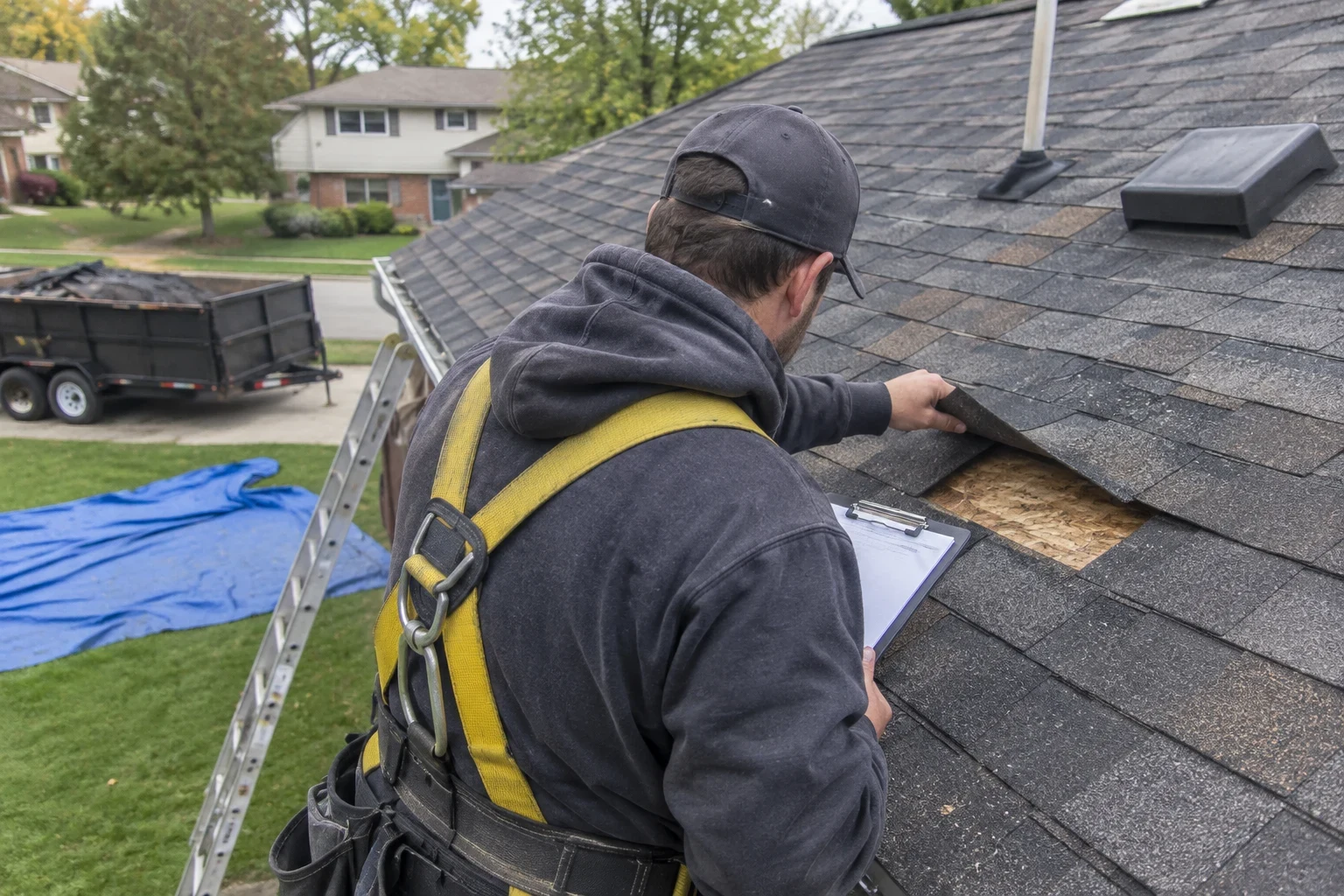
- Every hip, valley, dormer or skylight means trim and flashing bent and cut on site to fit. A plain two-sided roof with few penetrations installs faster and uses less trim stock than one broken into many planes.
- Deck condition
- Rotted sheathing stays hidden until the old roof comes off. Your estimate shows a set price per replacement sheet, so any deck repairs are counted the same way you saw on paper.
Metal Roofing Questions
Something not covered here? (317) 707-6771
Is a metal roof loud in the rain?
Not over solid decking, underlayment and an insulated attic. The drumming people remember usually comes from barns and sheds with panels fastened straight to open framing. On a house, most owners hear about what they heard with shingles.
Will hail dent it?
Big hail can leave dents, and thinner gauges dent more easily. Most dents are cosmetic and do not open a leak path, which is different from hail that cracks shingle mats. Ribbed profiles and heavier steel hide dents better than flat panels.
Can you put metal over my existing shingles?
Some codes allow it, but we usually advise a tear-off. Leaving shingles underneath hides soft decking, holds heat and moisture, and can make panels sit unevenly. We will show you what we find on your roof and explain our recommendation.
Will a metal roof draw lightning to my house?
It will not. Lightning strikes based on height and location, not roofing material, so steel panels do not raise the odds. Metal also does not burn, which works in your favor if a strike ever happens.
What if my metal roof was damaged in a storm?
We work with homeowners and insurance companies on storm damage claims. We record the damage with photos and measurements and explain how a claim usually moves along. Our Storm Damage Repair page goes into more detail.
Compare Metal Roof Options on Your Home
We will inspect your roof, look at the deck and attic, and lay out which metal system fits your home and budget. The inspection is free.